Biocontrol Portfolio

MargoSpin™ Neem Oil + Spinosad Program for Dual Mode Crop Protection

Dual-Active Synergy
Residue-Conscious Rotation
Export Documentation
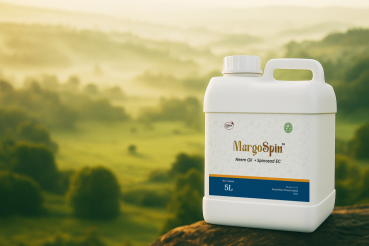
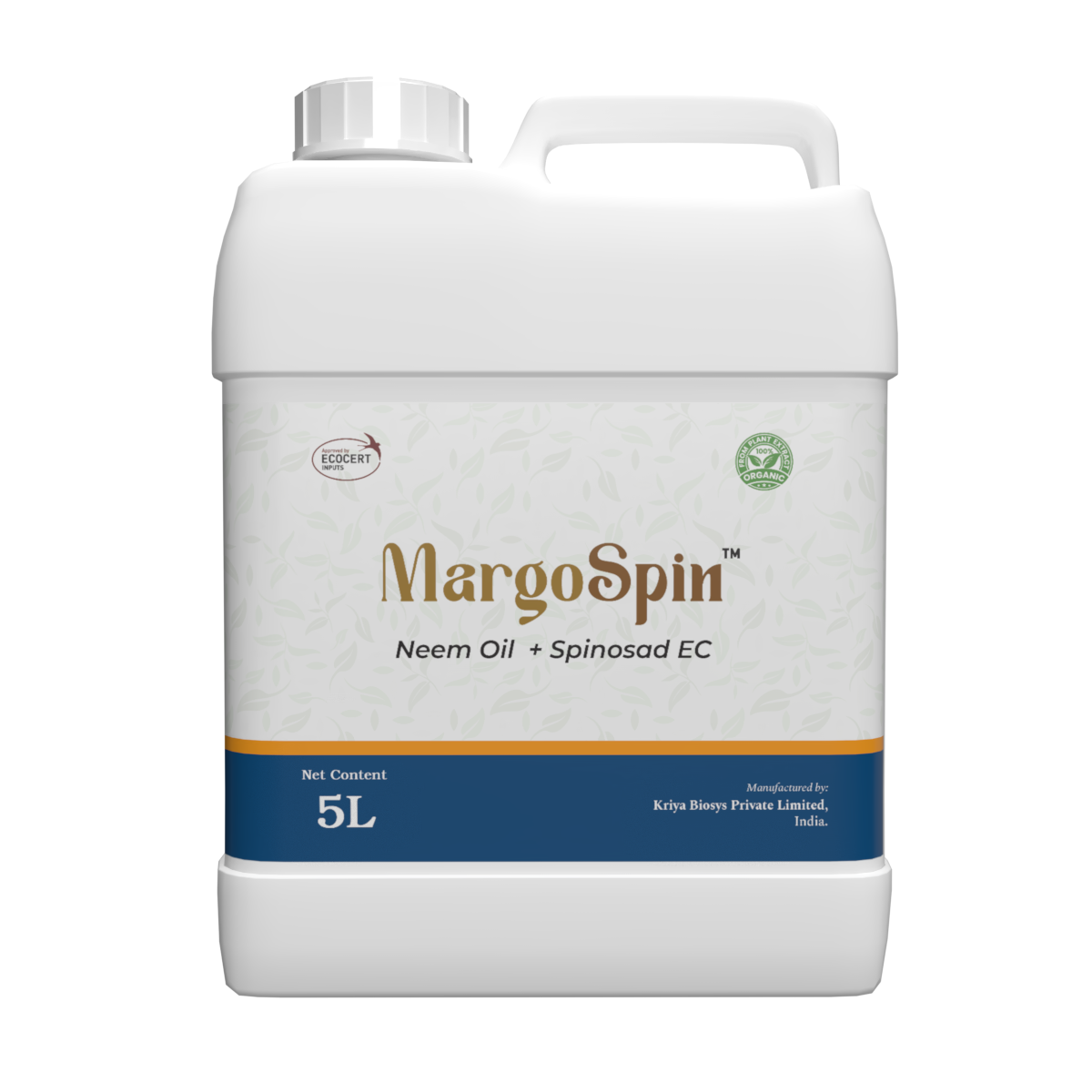
MargoSpin product imagery placeholder
Product Overview

Combined botanical and microbial power for high-pressure programs

MargoSpin unites clarified hydrophobic extract of neem oil with premium-grade spinosad to deliver fast knockdown and lasting suppression of hard-to-control pests. Cold filtration preserves limonoids that deter feeding while spinosad provides rapid contact and ingestion activity. Proprietary emulsifiers keep both actives evenly dispersed in high-volume spray rigs and low-volume mist systems. The formulation stays stable across diverse water qualities, maintaining droplet adhesion on waxy foliage. Export-ready traceability documentation and technical dossiers accompany every shipment for seamless onboarding. MargoSpin integrates into organic and residue-managed IPM programs where chemical rotations are limited.

pest_control

Dual-Mode Control

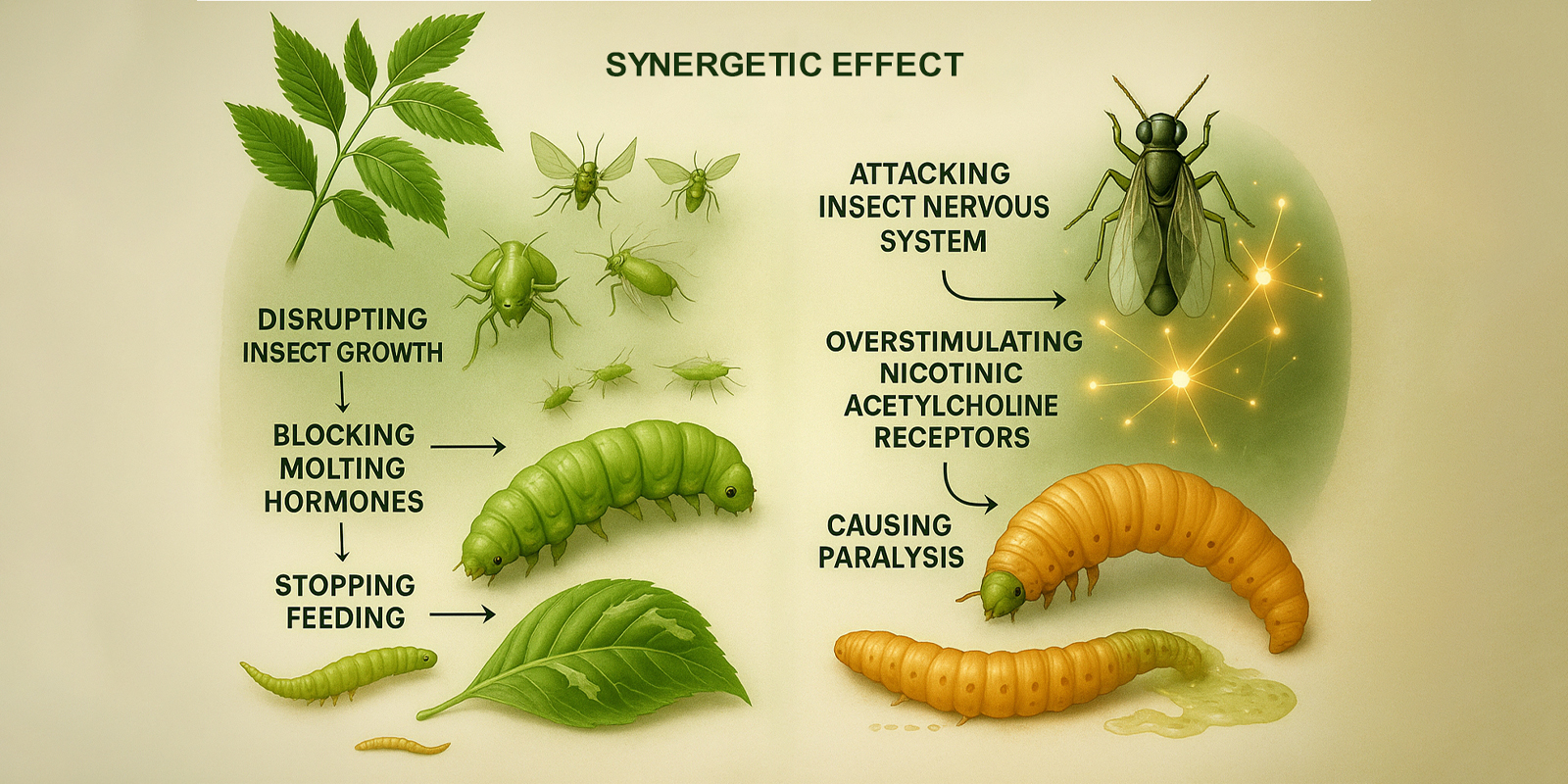
Combines feeding deterrence with neural disruption to manage resistant pest populations.

humidity_mid

Optimized Coverage

Oil phase improves leaf wetting while spinosad remains bioavailable throughout the canopy.

fact_check

Regulatory Ready

Supported by global dossiers, SDS, and residue data for rapid distributor approvals.

MargoSpin Line-Up

One formulation engineered for broad adoption

A dual-active emulsifiable concentrate that fits premium horticulture and plantation programs.

Why Distributors Choose MargoSpin

Key Features

science

Complementary Actives

Neem limonoids disrupt feeding while spinosad delivers contact and ingestion mortality.

eco

Organic Alignment

Meets leading organic certification requirements and supports residue-reduction programs.

track_changes

Resistance Stewardship

Dual modes extend rotation intervals and reduce pressure on synthetic chemistries.

inventory_2

Distributor Support

Delivered with dossiers, SDS, marketing collateral, and lab analytics for onboarding.

Mode of Action

Dual-action disruption across pest life stages

Mode of action visual placeholder
Pests Controlled

Target Spectrum

  • Thrips (Frankliniella spp., Thrips tabaci)
  • Lepidopteran larvae including Helicoverpa, Spodoptera, Plutella
  • Whiteflies (Bemisia spp., Trialeurodes spp.)
  • Aphids (Myzus, Aphis, Rhopalosiphum spp.)
  • Leafminers (Liriomyza spp.)
  • Scale insects and mealybugs
Diseases & Secondary Effects

Indirect Benefits

  • Reduces sooty mold by limiting honeydew accumulation
  • Lowers vector pressure for viral and bacterial diseases
  • Supports softer IPM rotations with low pre-harvest intervals
  • Enhances efficacy of microbial partners through synergistic modes
Crops Covered

Performance validated across intensive crop systems

Vegetables: tomato, pepper, chilli, okra, cole crops Fruit & nut: citrus, mango, grape, pome fruit, avocado Plantations: tea, coffee, cocoa, oil palm Protected cultivation: greenhouse ornamentals and berries Field crops: cotton, soybean, pulses, maize Herbs & specialty: basil, mint, coriander, spices
Dosage & Dilution

Program-ready dosage plans

MargoSpin EC – Neem Oil 70% + Spinosad 1.2% EC

Application Focus Dosage per Acre Product per Liter of Water* Application Interval
Vegetables & field crops 0.5–1.0 gal (1.9–3.8 L) 5–10 mL / L Every 7–10 days
Fruit, nut & plantation crops 1.0–2.0 gal (3.8–7.6 L) 10–20 mL / L Every 7–14 days
Protected cultivation / greenhouse 0.25–0.75 gal (0.95–2.8 L) 2.5–7.5 mL / L Every 5–7 days

*Rates align with clarified hydrophobic extract of neem oil label guidance (EPA Reg. No. 96019-4) and maintain equivalent spray concentrations when paired with spinosad.

Program Fit

Use sites, tank mix flexibility, and storage guidance

map Use Sites

  • Open-field vegetables, pulses, cereals, and cotton
  • Fruit, nut, and beverage crop plantations
  • Greenhouse, shade-net, and hydroponic production
  • Nursery propagation and ornamentals
  • High-value export horticulture programs

science Compatibility

  • Compatible with most biologicals, micronutrients, and spreader stickers
  • Conduct jar test before mixing with sulfur or copper fungicides
  • Maintain spray solution pH between 5.5–7.0 for stability
  • Add to the tank after water-soluble powders and before adjuvant oils

inventory Shelf Life & Storage

  • Unopened shelf life: 24 months from manufacturing
  • Store between 5–30°C away from direct heat or sunlight
  • Keep drums sealed to prevent solvent loss and oxidation
  • Agitate containers prior to decanting for uniform active distribution

Bring dual-mode neem and spinosad programs to your market

Kriya supports distributors with regulatory dossiers, formulation expertise, and supply chain assurance for sustained growth.