Biocontrol Portfolio

K-Guard™ Botanical Insect Growth Regulator for Residue-Sensitive Markets

Karanjin Purity Assured
EC & WP Formats
Export Documentation
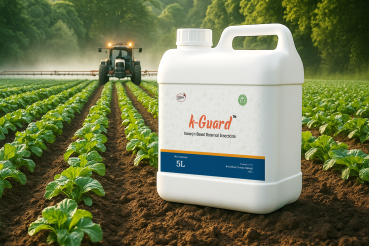
K-Guard product imagery placeholder
Product Overview

Botanical knockdown that keeps spray programs compliant

K-Guard pairs karanjin-rich extracts with advanced emulsification to deliver consistent insect growth regulation in export-grade production systems. Each batch is cold-filtered to stabilize furanoflavonoids and maximize contact efficacy on resistant sucking pests. Manufacturing controls keep solvent residues below international thresholds, enabling low PHI schedules without compromising performance. The EC concentrate and WP dispersible powder give distributors flexibility across humid, arid, and protected environments. Detailed dossiers, SDS, and field protocols ship with every order to simplify market onboarding.

psychology

Neuro Disruption

Interferes with feeding and molting in aphids, whiteflies, and thrips within hours of contact.

deployed_code

Dual Delivery

Choose fast-spreading EC for foliar coverage or dust-free WP for sensitive greenhouse programs.

library_add_check

Documentation Ready

Comprehensive regulatory packs support organic certification submissions and global registrations.

K-Guard Line-Up

Two formulations built around karanjin mastery

Distributors can tailor residue-conscious programs with complementary EC and WP formats backed by full documentation.

Why Distributors Choose K-Guard

Key Features

ink_eraser

Rapid Feeding Halt

Karanjin-rich actives shut down pest feeding quickly, reducing crop damage in high-value horticulture.

water_drop

Stable Spray Quality

Optimized adjuvant systems keep emulsions stable in hard water and across a broad pH range.

forest

Sustainable Sourcing

Responsible pongamia sourcing and solvent recovery deliver a lower environmental footprint.

handshake

Distributor Enablement

Includes multilingual labels, residue data, and launch playbooks to accelerate commercial rollouts.

Mode of Action

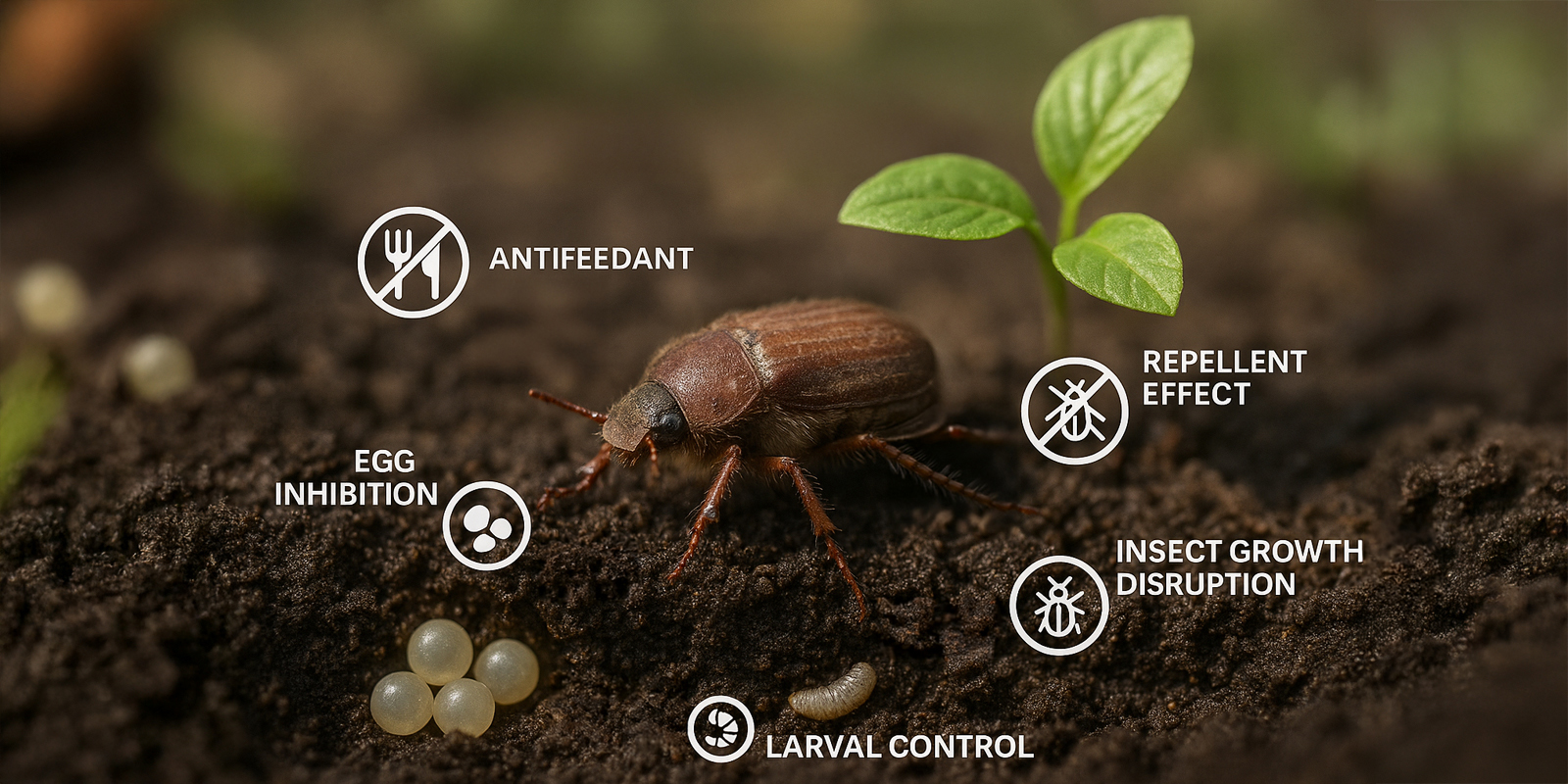
Disrupting pest feeding and development cycles

Mode of action visual placeholder
Pests Controlled

Target Spectrum

  • Aphids (Aphis gossypii, Myzus persicae)
  • Whiteflies (Bemisia tabaci, Trialeurodes vaporariorum)
  • Thrips (Frankliniella occidentalis, Thrips tabaci)
  • Leafhoppers and planthoppers
  • Scale insects and mealybugs
  • Mite suppression in integrated programs
Diseases & Secondary Effects

Indirect Benefits

  • Reduces honeydew and sooty mold build-up on leaves and fruit
  • Lowers vector pressure for viral and phytoplasma diseases
  • Supports IRM programs as a botanical rotation partner
  • Improves marketable yields through cleaner foliage and fruit finish
Crops Covered

Versatile performance across premium crops

Vegetables: chilli, tomato, okra, cucurbits Fruit crops: citrus, mango, grape, banana Plantation crops: tea, coffee, cocoa Field crops: cotton, soybean, pulses Protected cultivation: ornamentals, herbs, nursery stock Spices & medicinal plants needing residue compliance
Dosage & Dilution

Label-aligned guidance for karanjin programs

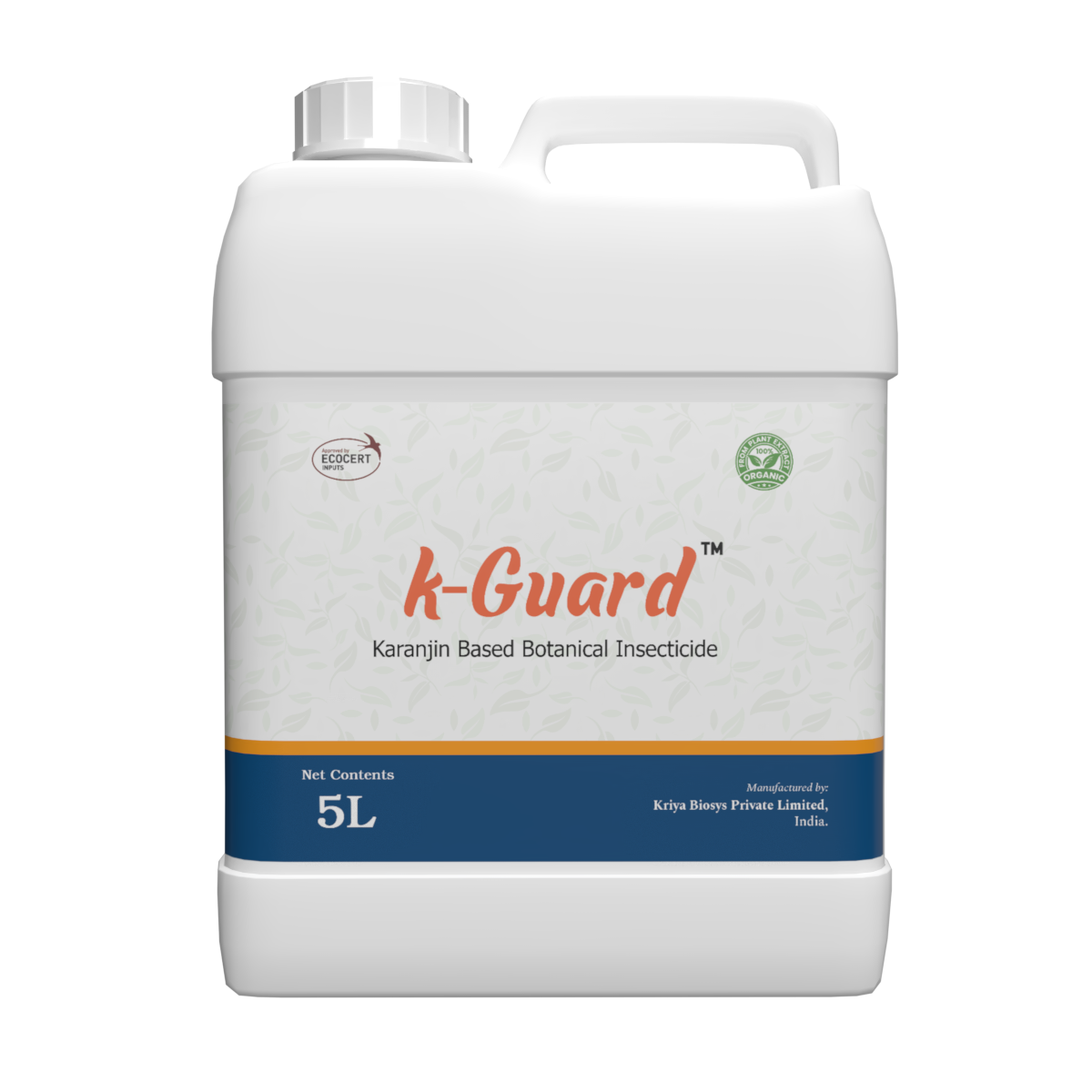
K-Guard 2% EC – Karanjin Emulsifiable Concentrate

Application Focus Dosage per Acre Product per Liter of Water* Application Interval
Vegetables & spices 500–750 mL 2.0–3.0 mL / L Every 7–10 days
Plantation crops 600–900 mL 2.4–3.6 mL / L Every 10–14 days
Protected cultivation 400–600 mL 1.6–2.4 mL / L Every 5–7 days

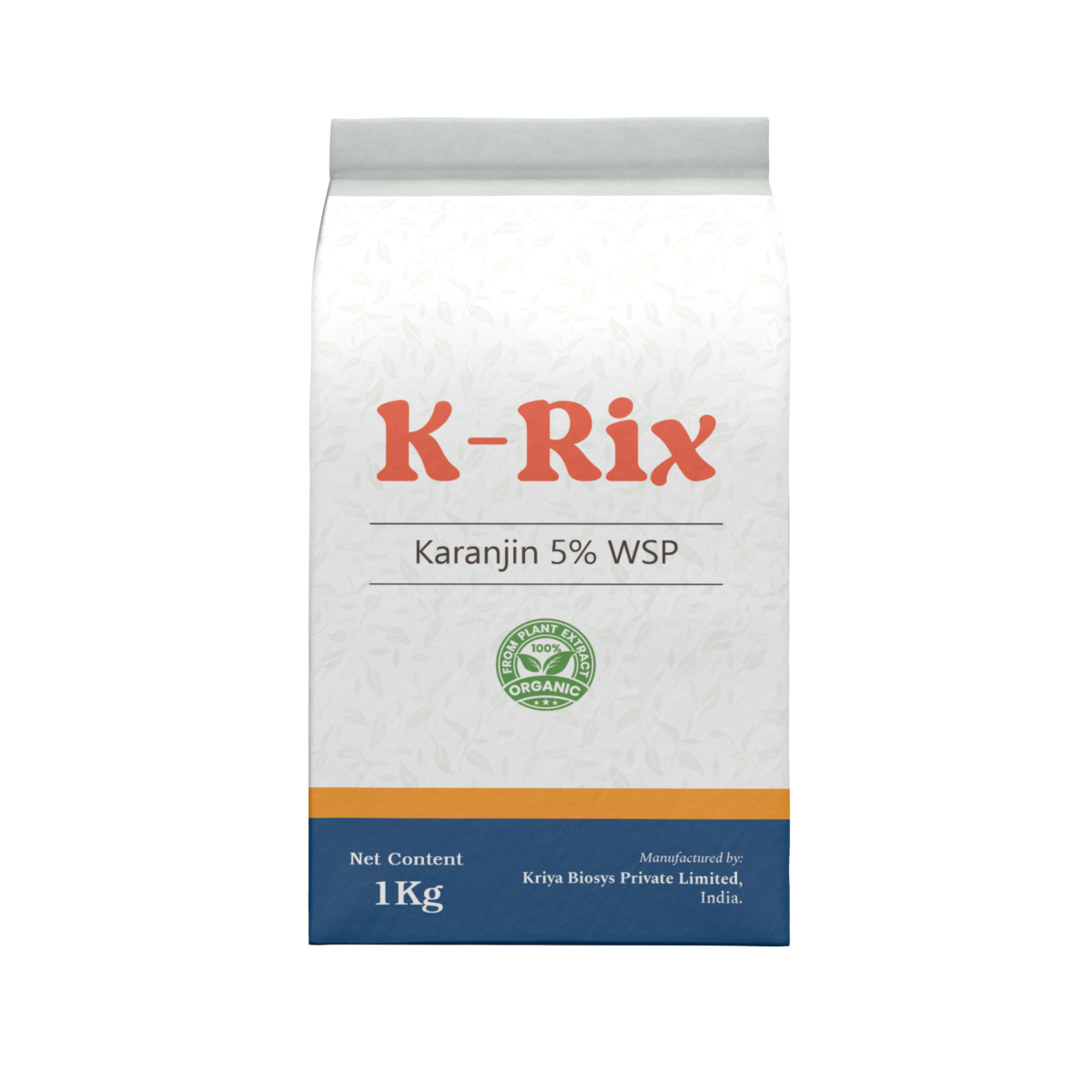
K-Rix 5% WP – Karanjin Wettable Powder

Application Focus Dosage per Acre Product per Liter of Water* Application Interval
Vegetables & herbs 350–500 g 1.4–2.0 g / L Every 7–10 days
Ornamentals & nursery 300–450 g 1.2–1.8 g / L Every 5–7 days
Plantations 400–600 g 1.6–2.4 g / L Every 10–14 days

*Assumes spray volumes of 200–250 L per acre for field applications. Adjust water volume to canopy density and sprayer output.

Program Fit

Use sites, tank mix flexibility, and storage guidance

map Use Sites

  • Open-field vegetables, pulses, cotton, and oilseeds
  • Fruit orchards and plantation crops requiring low residues
  • Protected cultivation including greenhouse and shade-net systems
  • Nursery and ornamental production facilities
  • Organic transition acres seeking botanical rotations

science Compatibility

  • Compatible with most biopesticides, spreader-stickers, and low-alkaline fertilizers
  • Avoid tank mixing with strong alkaline materials or Bordeaux blends
  • Maintain spray solution pH between 5.5–7.0 for optimal stability
  • Add last in tank after wettable powders and dispersible granules

inventory Shelf Life & Storage

  • Unopened shelf life: 24 months from manufacturing
  • Store between 5–30°C away from direct sunlight and heat sources
  • Keep containers tightly closed to prevent solvent loss or moisture uptake
  • Agitate drums or roll bags before dilution to re-suspend active ingredients

Bring botanical IGR performance to your portfolio

Partner with Kriya to access high-purity karanjin formulations, regulatory expertise, and manufacturing scale for international growth.